




















Latest Insights

Corvidae AI & The Agentic Future

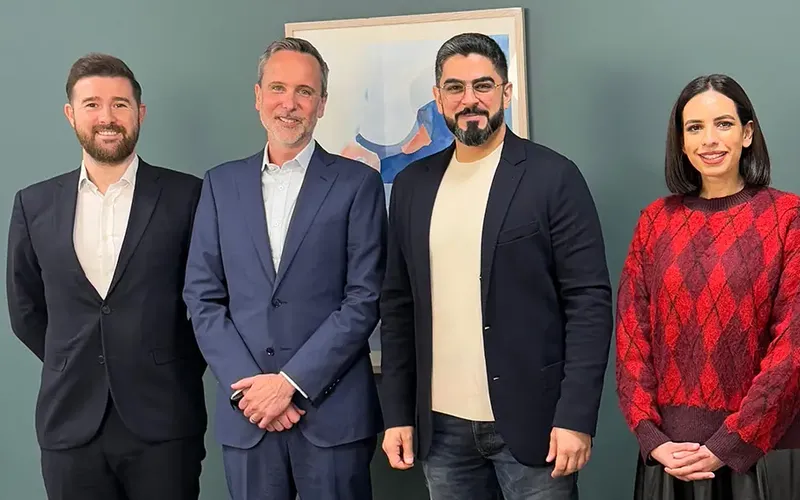
Exclusive Partnership with Easa Saleh Al Gurg Group Brings Revolutionary Cookieless Attribution Technology to UAE and Saudi Arabia

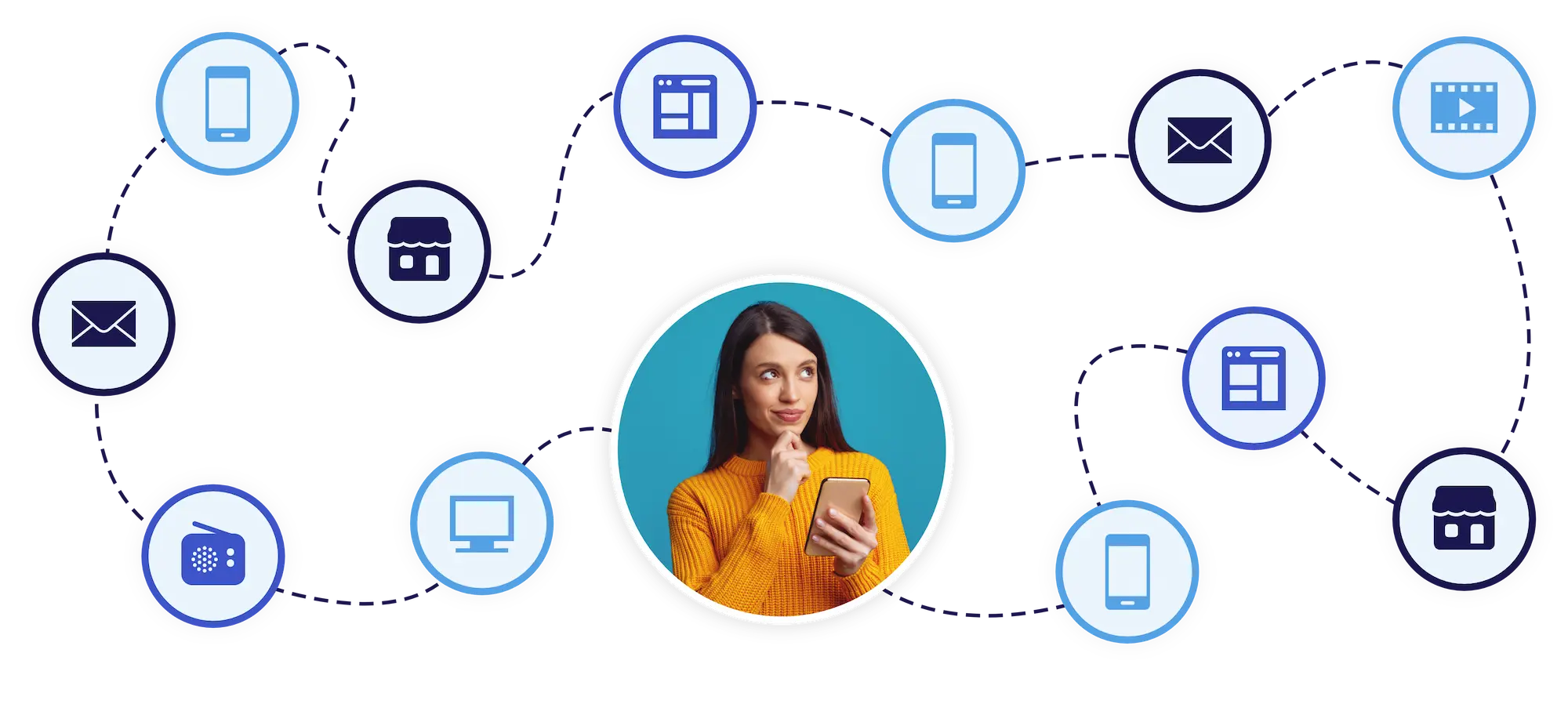
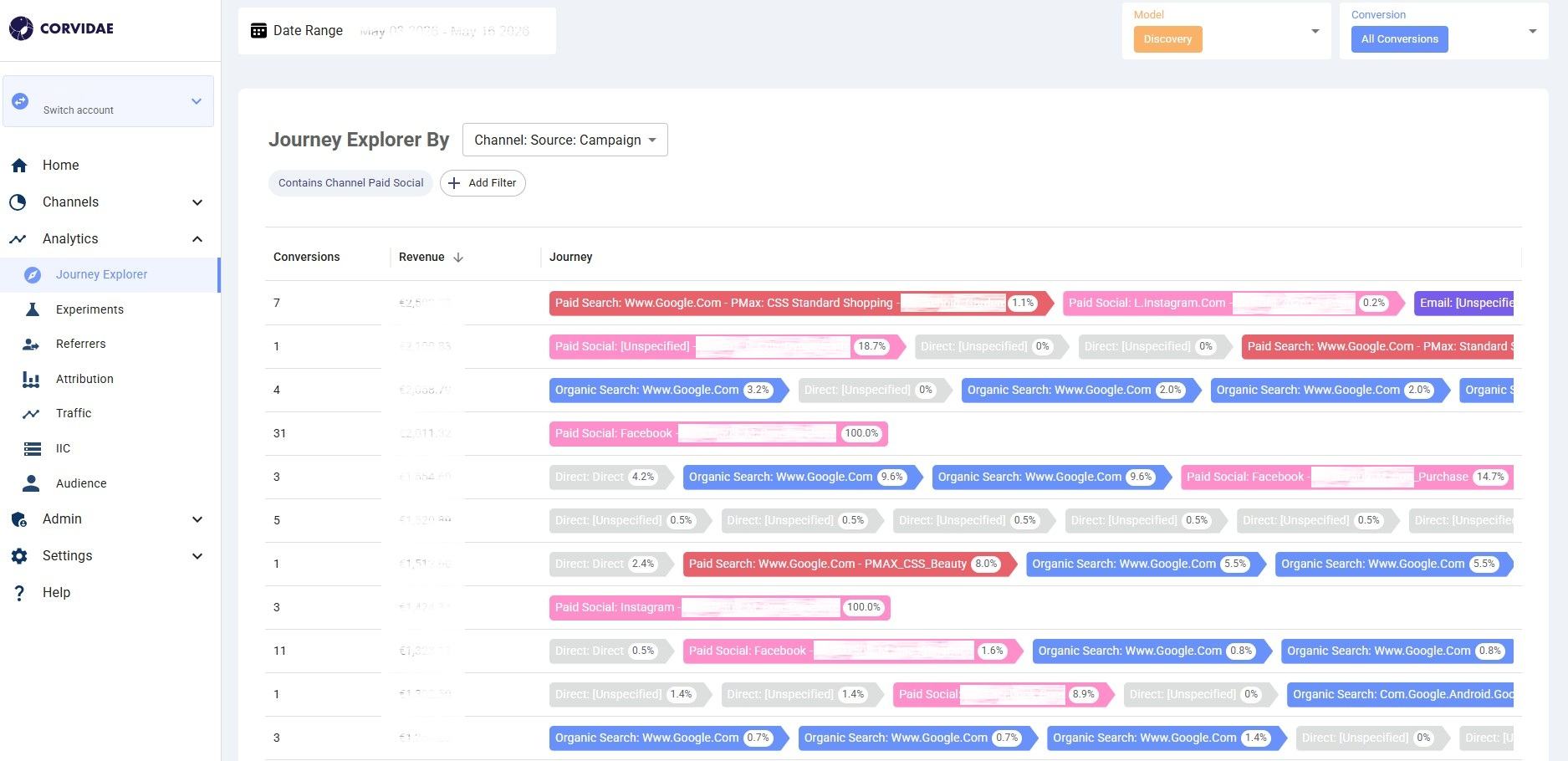
Customer journeys are complex, but attribution doesn't have to be. Corvidae's attribution models use unified data, allowing you to understand where the true value lies in your marketing efforts.
Unified Journeys: Attributed

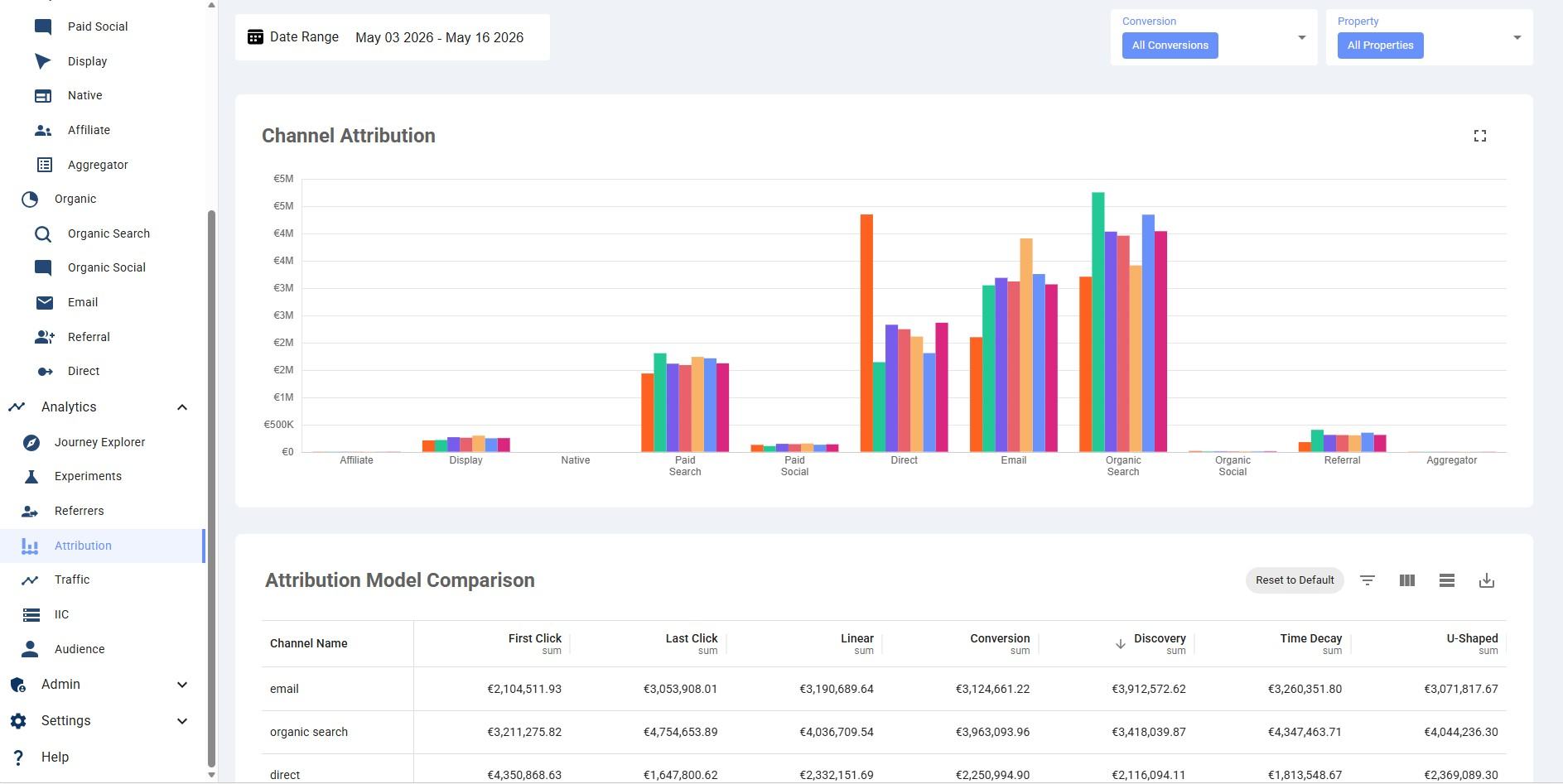
Corvidae’s attribution model unifies data silos, allowing you to understand where the true value lies in your marketing efforts.
The Benefits of Corvidae Attribution Models
Move away from failing cookie and id-stitched analytics, where the majority of your decisions are based on broken data.
Our AI probabilistically rebuilds cross-channel journeys using only 1st-party event stream data: no cookies!
Validate the transformational impact of accurate attribution using A/B split tests in your AdTech & benefit from automated GDPR and CCPA compliance.
FAQs
We partnered with Edinburgh University to develop our unique attribution models.
One is a Customer Conversion model based on an LSTM (Long Short Term Memory) Neural Network, Deep Learning style of AI. The second is a Customer Discovery model, which combines the LSTM with a Markov/Shapley statistical model approach - this is our most advanced Data Driven Attribution (DDA) model. Both are Multitouch Attribution (MTA) models.
Corvidae's patented cookie-free data rebuilding informs both models using a custom technique for each customer to understand how people really interact with your marketing to predictively stitch across devices.
Last-click is heavily biased towards direct visits.
Last non-direct click - as used by GA4 and Adobe - ignores the influence of all the preceding channels. First click rewards only the first touchpoint.
Only using rules based models means marketers can never understand the true value of their marketing mix. Without Multitouch Attribution (MTA) models it is impossible for marketers to understand the impact each channel - or ad campaign - has on total revenue and the customer journey.
Corvidae attributes revenue to the most granular level possible - the individual visit or impression, and then allows aggregation up to insightful segments.
Shapley and Markov models cannot offer a value to such a granular level, as they are statistical models.
Only by first stitching and applying an MTA model like Corvidae's LSTM model can you then apply further statistical modelling to avoid over-fitting and the failure of the underlying mathematics in MMM, Shapley or Markov approaches.
Using Rebuilt Customer Journey Data
Corvidae uses a 3-stage process to collect, rebuild and unify your analytics data.
Our AI-driven technology is core to breaking down silos to provide you with an accurate, uncannibalised view of every step of the customer journey.
In our latest case study Corvidae AI grew Google Ads revenue by €690k while reducing CPA by 45%.
Technical Deep Dive
Attribution models are central to delivering highly effective marketing that contributes to revenue and ROI inside any business.
And there are a plethora of them out there from simple rules-based approach to data driven models like Shapley and Markov and beyond.
In this blog, we look at the benefits and limitation of these types of approaches whilst comparing them to the innovative approach taken by Corvidae, which leverages cutting-edge technology like Machine Learning and AI to really change the game in attribution model terms.
But first, let’s start with some quick context that sets us up for a wider analysis.

Rules Based Modelling
Limitations in simple rules-based attribution models - like Last Click (which is still the default model in Google 360), First-Click, Linear and Time Decay models - mean they lack the sophistication needed to capture the complexity of increasingly complex buying journeys. Journeys that are happening on and offline, across a raft of devices and are being influenced by a plethora of media from in-store digital promotions to re-targeting ads.
They also, by definition, have inherent biases to specific parts of the funnel that have driven some marketers to explore data driven-models in the search for more effective marketing attribution.
These predictive, data-driven models are much better attuned to handling the nuances that exist in complex customer journeys. And have a focus on aggregating data and modelling how touchpoints actually influence conversion as part of the wider customer journey.
Two of the more common ones are Shapley and Markov: and we take a quick look at each in the next section.
Book a demo and see the journeys you’re missing.
Understanding Shapley
Shapley is a predictive attribution approach based around game theory.
Essentially the concept being that several “actors” can work together co-operatively towards a common goal or payoff - with a focus on effectively valuing the marginal contribution each exerts in the process.
In marketing attribution terms, channels and campaigns are the actors that work collaboratively to influence marketing conversion.
A very broad-brush explanation of a typical Shapley approach is to find an average incremental value for a particular channel touchpoint by looking at all conversion paths that exist, as well as their conversion path rates and their mix of channels. These are then compared to create an average incremental value for each channel for each conversion path. This then feeds back into channel and campaign analytics.
Benefits of the Shapley attribution model
Limitations of the Shapley attribution model
A second predictive attribution approach that we also have experience of using is Markov Chain.
Markov Chain is an example of a sophisticated, probabilistic modelling approach that looks at individual events in the customer journey and identify patterns of user behaviour to build journey profiles.
By evaluating the probability to move from one state to another in the journey.
For example, if a website visitor is identified as coming in on Organic Search, the Markov Chain would then understand and look at the other channels the visitor could have come in on. And the likelihood they would come back from Organic. It would also look to see if they would come from Paid or if they would never come back or if they would transact.
And use the resulting values to effectively attribute the impact of specific media.
Again, we have used Markov in the past. So, what are the benefits of this approach?
And like Shapley it also falls prey to the issue around large data sets and the sheer cost and time associated with constant re-modelling of data.
So, Shapley and Markov both have pros and cons. But what if the focus on choice of attribution model is masking other considerations that are just as – if not more – important? Like the quality of data that you are feeding into them?
Corvidae Case Studies
After two years of Corvidae automation driving Paid Search performance, Gift Universe brand Menkind has gone from strength to strength.
Increasing revenue by £4.6m while also dropping cost per acquisition (CPA) by 11% means a very healthy +45% ROAS improvement.
With plenty of scope to grow further, Corvidae is now the driving force behind Menkind's incredible success - find out how much revenue Corvidae can generate for you today.
Under increasing pressure to save wasted media spend, Corvidae AI was deployed to build longer customer journeys using its globally patented AI path stitching technology.
A roaring success for Western Union, Corvidae built journeys 132% longer than Google or Adobe could, revealing the influence of earlier touchpoints on Western Union revenue.
Feeding this data back into Google Ads allowed Corvidae to automate reducing Cost Per Acquisition (CPA) by 45% - a staggering result that saved significant media spend ready to be reallocated into newly efficient Paid Campaigns anywhere in their marketing mix.
We know that data quality is a key concern for many marketers. In fact, QueryClick’s recent survey of Performance Marketers in the retail sector found that over 60% of retail marketers think data to support cross-channel decision-making is broken.
In our early days of working with clients we used Shapley and Markov for attribution but what we found was that they generated fantastically different results depending on the data used. And, crucially, whether or not you rebuilt your data BEFORE you applied the attribution.
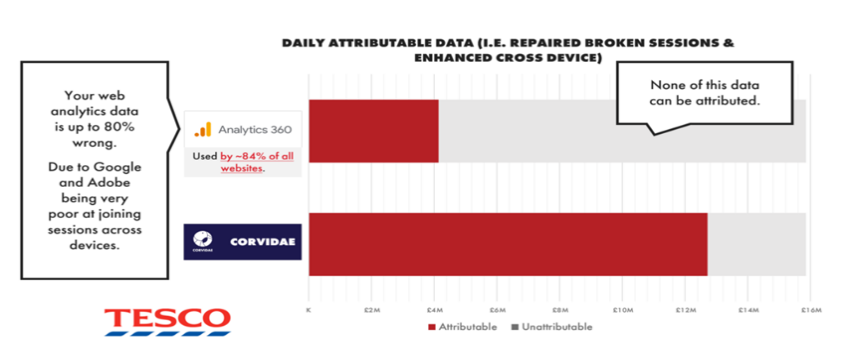
Take the example below, which is a real-world example for work done with our client leading UK retailer Tesco. In this case we compared the relative attribution performance of Google Analytics 360 (which uses the Shapley model for attribution) with the approach that Corvidae takes which includes rebuilding the core data before performing more effective attribution.
The results are fairly self-explanatory, with up to 80% of the data incorrectly categorised in the Analytics 360 approach.
So what is different about the approach that Corvidae is taking to achieve this?

The issue above is caused by the poor job that cookies do of effectively tracking individual users across complex, cross-device journeys.
And this was one of the early learnings in our journey as a business to a much better way of performing attribution on behalf of customers. And the genesis of the idea behind Corvidae. A strong realisation that in a lot of ways the choice and relative sophistication or effectiveness of your attribution model is a bit of a moot point – if you are essentially putting data from lots of brokencustomer journeysinto it.
Move away from failing cookie and id-stitched analytics, where the majority of your decisions are based on broken data.
Our AI probabilistically rebuilds cross-channel journeys using only 1st-party event stream data: no cookies!
Validate the transformational impact of accurate attribution using A/B split tests in your AdTech & benefit from automated GDPR and CCPA compliance.
Build Attribution on Rebuilt Data
So, the first priority is to rebuild your data: before you apply attribution. And that is what Corvidae does. It uses innovative session stitching technology to rebuild your data from the ground up. Effectively at this point we are replacing the cookie. And what Corvidae is able to do at a granular level is create a map of every interaction that an individual has - in a privacy respected environment. Then put data alongside it and identify markers, like time series and location, and "stitch" ads and media into the conversion journey.
At the centre of our approach to attribution – effectively our attribution “model” that replaces Shapley or Markov – is LSTM (Long-Short Term Memory). LSTM is a type of recurrent neural network capable of learning order dependence in sequence prediction problems.
We undertook a two-year project with Edinburgh University which looked at applying Machine Learning techniques (Random Forest in this case) and the principles of LTSM to create technology that applies the deep learning techniques to the issue of marketing attribution.
And it has a number of really significant benefits including:
It also removes some of the data restrictions that have dogged Shapley and Markov because it is possible to work with smaller data sets that are much more accurate. Which also opens the door to campaign and creative level attribution analysis that simply isn’t an option in either of the other two models. Due to cost and resource issues.
So LTSM effectively is our 'Customer Discovery' Data Driven Attribution (DDA) model inside Corvidae.
Today we also can combine it with Shapley approaches to offer our 'Customer Discovery' model, the most advanced attribution model of all.

Automating Value & Driving ROI
Effective attribution in itself is about effectively measuring the contribution of each and every ad and campaign creative to establish the impact it is having. And ultimately its impact on overall business ROI.
Shapley and Markov might get you part of the way into improving your attribution view. However, as we have seen, without giving due consideration to rebuilding your data how valuable is that really?
And in a highly competitive market, where a really significant proportion of ad buying is auction-based and geared towards buying on Facebook and Google. Anything that helps you move up the funnel – because you can accurately attribution the impact of higher funnel activity - is gold dust. As that’s where you can acquire customers more cheaply.
And today, we can prove that with automated AdTech ROAS improvement and incrementality.
Google's AI can only optimise ad placements using conversions it can see.
Corvidae's patented stitching feeds the true value of top-of-funnel touchpoints back into your AdTech.
This prevents Google from overspending on competitive bottom-of-funnel auctions and guides it to find net-new customers earlier: instantly generating incremental revenue at a lower CPA.
Capture New Customers for Less
This approach also keeps you away from a crowded lower funnel which is competitive for a number of reasons including:
Corvidae, data rebuilding and LSTM enable you to step away from that spiral and focus on finding higher value, lower cost opportunities further up the funnel to boost your effectiveness and marketing ROI.
Getting started on the road to accurate attribution doesn’t have to be complicated. Our team are on-hand to make the move to a new attribution tool as easy as possible.